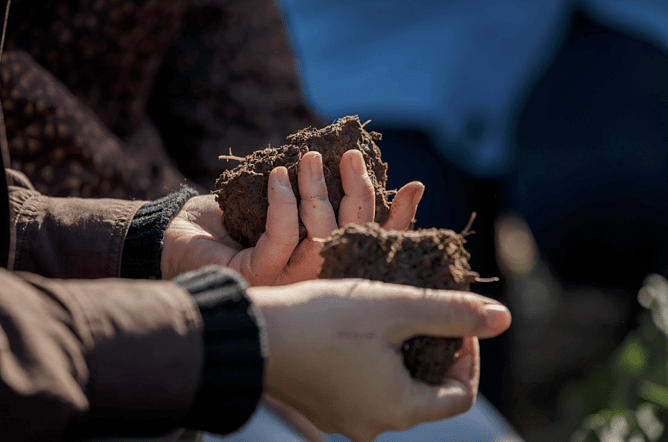
From supporting six community growing spaces in Auckland to a national regenerative organic education pathway, Earthworkers is building a future where growers become mentors and knowledge continues to grow.
In 2023, The Jenkins Foundation began supporting Communities of Regenerative Learning, an initiative developed by For the Love of Bees across six community-connected growing spaces in Tāmaki Makaurau Auckland.
The programme brought growers together through practical education, site-specific agronomic advice and ongoing peer support. It also revealed something important: learning regenerative organic growing practices was only the beginning. Growers needed access to deeper technical knowledge and ongoing trusted advice to help them put their learning into practice.
Now, in the fourth year of The Jenkins Foundation's support, that early work has evolved into Earthworkers, a national regenerative organic education initiative connecting home and community growers, commercial producers and emerging agronomists.
The Jenkins Foundation's continued commitment has been particularly valuable during this period of change, providing the stability needed to develop an education pathway shaped by the real experiences and evolving needs of growers.
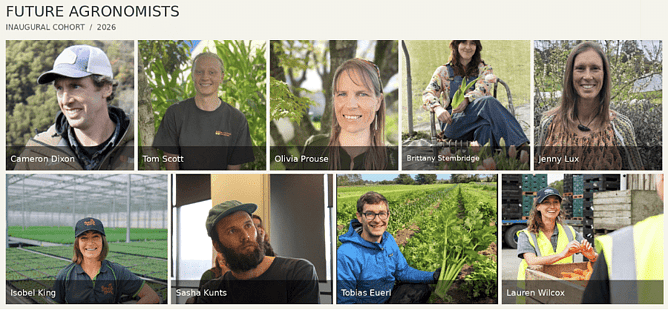
2026 has marked a significant turning point, with the delivery of the first Hort 201 advanced course in Palmerston North, the inaugural Future Agronomists cohort preparing to begin in Rotorua, and a redesigned Hort 101 programme that will make the pathway more accessible in 2027.
From community learning to a complete education pathway
The original Communities of Regenerative Learning programme demonstrated both the value of peer learning and the need for continuing technical support.
Every growing space presented different challenges. Soil mineral imbalances, plant nutrition, pests, disease and production pressures required growers to understand not only what practices to use, but why they worked and how to adapt them to their own conditions.
Earthworkers' long-running alumni mentoring network became an important part of the response. Growers continued asking questions, sharing observations and supporting one another long after attending courses.
Over time, something else began to emerge. Experienced alumni were developing the knowledge and confidence to help those at the beginning of their learning.
This insight has become central to Earthworkers' long-term vision: an education pathway where growers can progress from foundational learning to advanced technical knowledge and, eventually, become the mentors and agronomists who support others.
The Jenkins Foundation's sustained support has allowed Earthworkers to develop this approach over several years, responding to what growers need rather than simply delivering more courses.
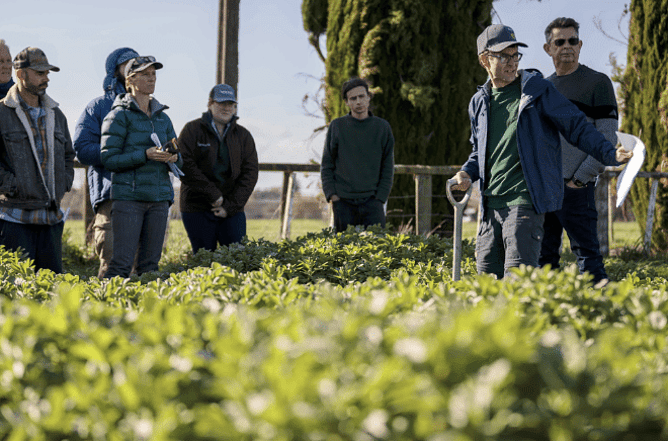
Hort 201 participants learning together in the field at Live2Give Organic Farm
Hort 201: Taking regenerative organic learning to the next level
In September 2026, Earthworkers delivered its first five-day Hort 201 Advanced Regenerative Horticulture course at Massey University in Palmerston North.
Sixteen participants attended, including six Hort 101 alumni and ten commercial growers and horticultural professionals.
Developed by Earthworkers' lead agronomist Daniel Schuurman, with curriculum development funded by Eurofins International, the course brought together advanced technical learning and practical application.
Participants explored soil mineral nutrition, diagnostic testing, beneficial microbes, plant health, irrigation, pest and disease management, and the interpretation of soil and leaf analysis.
A field visit to Live2Give Organic Farm provided an opportunity to see how these principles are applied within a working commercial growing system.
The course was designed to extend well beyond five days. Participants have continued their learning through online sessions and an ongoing mentoring group, where real growing challenges can be discussed with Daniel and fellow growers.
This continuing support is essential. Regenerative organic horticulture requires growers to observe, interpret and respond to changing conditions. The learning develops through practice, supported by experience and shared knowledge.
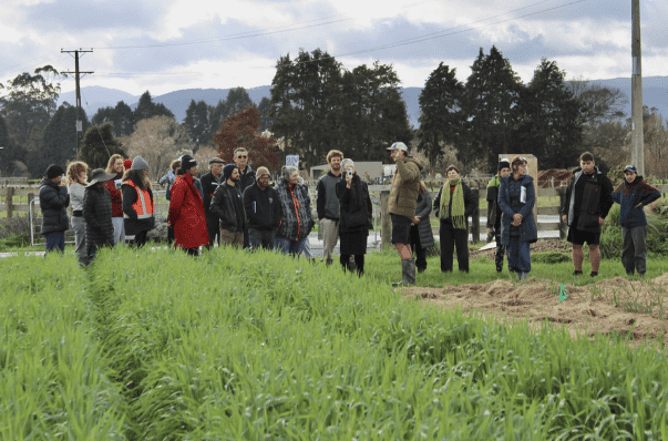
Cameron Dixon working and sharing learnings at Māngaroa Farms at Earthworkers Hort 101 in 2025
Future Agronomists: The first cohort of nine
In November 2026, Earthworkers will welcome its inaugural cohort of nine Future Agronomists.
The group includes experienced commercial growers, technical managers, consultants and long-term Earthworkers alumni who are ready to deepen their agronomic knowledge and develop their capacity to advise others.
Over twelve months, participants will work through real growing challenges, share case studies and receive ongoing professional mentoring from Daniel Schuurman.
The programme is designed to develop capable, independent regenerative organic agronomists who can provide reliable, site-responsive support to growers across Aotearoa.
It also represents an important next step in addressing the challenge identified through Communities of Regenerative Learning.
Small-scale and community growers often need technical guidance but cannot always afford regular professional consulting. As Future Agronomists develop their skills, Earthworkers intends to create opportunities for them to support growers earlier in their learning, while receiving appropriate professional oversight themselves.
One participant, Cameron Dixon, Market Garden Operations Manager at Māngaroa Farms in Upper Hutt, illustrates this progression. Having completed Hort 101 and Hort 201, Cameron is now entering Future Agronomists to deepen his technical expertise and develop his capacity to support other growers.
His journey reflects the wider opportunity emerging within Earthworkers: alumni are becoming not only more capable growers, but potential educators, mentors and agronomists.
Each new generation of learners can help build the capability of the next.
Read Cameron's Field Notes article: From Soil Balance to Food Quality: My Journey as a Regenerative Organic Market Gardener
The Jenkins Foundation has also encouraged Earthworkers to create opportunities for alumni to share their experiences and knowledge through Field Notes, a growing collection of articles written by growers themselves. These firsthand accounts capture the challenges, discoveries and practical learning that happen beyond the classroom.
In 2027, Earthworkers plans to expand Field Notes, bringing more alumni voices and practical experiences into a growing resource that supports learning across the wider horticultural community.
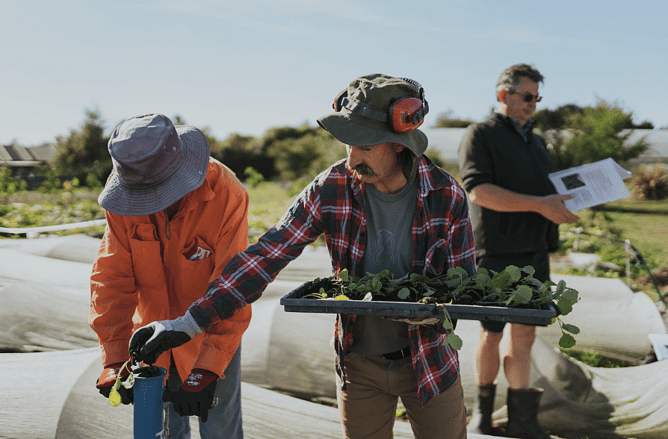
Hort 101 practical learning —alumni farm Earthstewards 2025
A more accessible Hort 101 in 2027
As Earthworkers has developed its advanced education, it has also recognised the need for different entry points into regenerative organic growing.
In response, Hort 101 has been redesigned into two complementary courses.
Hort 101 A is a two-day practical course for home growers, māra kai, community gardens and small-to-medium-scale producers. It introduces the hands-on practices that support healthy soils and productive growing systems.
Hort 101 B is a three-day technical course for growers who want to develop a deeper understanding of soil biology, mineral nutrition, plant health and regenerative organic management. It is particularly relevant to commercial growers and those considering further professional development.
Participants can take either course independently or complete both as a five-day programme.
In 2027, Earthworkers plans to deliver its complete education pathway, from HOME and Hort 101 through to Hort 201 and Future Agronomists.
HOME will be offered at Maunga Kererū in the Auckland region, introducing practical regenerative organic growing at a household scale.
Earthworkers will also contribute to wider sector learning, with Daniel Schuurman and experienced grower and Future Agronomist Jenny Lux participating in the Underground Festival in March.
These developments are extending Earthworkers' reach while creating more opportunities for experienced growers to share their knowledge.
Preserving the knowledge our community creates
Alongside the education pathway, Earthworkers is beginning another important stage of development, supported by The Jenkins Foundation: building the digital infrastructure needed to preserve and share the knowledge generated through ongoing grower mentoring.
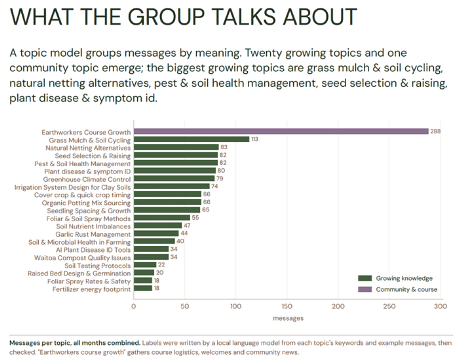
For more than seven years, Earthworkers' WhatsApp learning communities have provided a place for alumni to ask questions, share observations, troubleshoot problems and learn from experienced growers and agronomists.
Approximately 150 growers actively participate in this peer network, creating a valuable and growing body of practical knowledge.
But much of that knowledge is difficult to retrieve. Advice shared in response to one grower's problem may be equally valuable to someone else months or years later.
With The Jenkins Foundation's support, Blaine Western has begun researching how this information can be organised, preserved and made accessible.
The first stage has involved examining existing mentoring conversations to understand the kinds of questions growers ask, how knowledge is shared and how useful information might be retrieved.
The next stage is to design and develop a digital system that can support the mentoring network and build a curated, searchable knowledge archive.
Rather than creating a resource based only on predetermined teaching material, this archive will grow from the actual questions, experiences and challenges of Earthworkers alumni.
It is a way of future-proofing knowledge that has taken years to develop, ensuring it remains available to support growers long after individual conversations have ended.
The aim is not to replace the human relationships at the heart of Earthworkers, but to strengthen them and extend their value over time.
Earthworkers' WhatsApp mentoring network: research by Blaine Western into capturing, organising and preserving knowledge from the community, for the community.
Why this matters
The long-term health of our horticultural sector depends not only on how we grow food, but on the knowledge and support available to the people growing it.
Across Aotearoa, growers face increasing pressure to remain economically viable while improving soil health, strengthening ecosystems and adapting to changing environmental conditions. Making this transition requires more than enthusiasm for regenerative practices. It requires technical understanding, practical experience and access to trusted advice.
Earthworkers is making a small but important contribution by developing that capability from within the growing community itself. As growers deepen their knowledge and begin supporting others, the benefits of education extend beyond individual farms and gardens. Knowledge circulates, local expertise grows, and communities become better equipped to respond to the challenges ahead.
These goals are interconnected. Healthy, biologically active soils support productive growing systems, while better management of nutrients, water and plant health can reduce unnecessary inputs and improve farm resilience and profitability.
Building a lasting legacy
What began as a programme to support six community-connected growing spaces has evolved into an education pathway that can support people throughout their growing journey.
A home gardener can begin with practical foundations. A commercial grower can deepen their technical knowledge. An experienced alumnus can progress towards professional agronomy. And those developing expertise can begin supporting others who are just starting out.
Alongside this, the knowledge generated through years of mentoring can be preserved and shared with future learners.
Together, these developments represent a shift from delivering education to building a self-sustaining community of learning, technical capability and mutual support.
Earthworkers' long-term ambition is to help develop 100 capable, independent regenerative organic agronomists over the next ten years, strengthening access to reliable technical advice for growers throughout Aotearoa.
The Jenkins Foundation has played an important role in helping Earthworkers reach this point.
Its support over the past four years has provided continuity through a period of significant organisational growth, enabling Earthworkers to learn from its communities, strengthen its education pathway and begin developing the infrastructure needed for lasting impact.
As Earthworkers prepares to deliver its complete programme in 2027, The Jenkins Foundation's latest support is helping lay the foundations for the next stage: ensuring the knowledge and experience developed by today's growers can continue benefiting those who follow.
We are deeply grateful to The Jenkins Foundation for recognising the value of this long-term work and for continuing to help us build it.
Learn more about Earthworkers here